AisleIQ — Retail Price Intelligence
Think a cross between Honey (the online rewards extension) and Klaviyo (the eCommerce customer-behavior app) — but for physical retailers. Grocery pricing increasingly changes day to day based on demand, so shoppers need an edge; meanwhile in-store brands lack visibility into how customer behavior translates to purchases or missed opportunities. AisleIQ bridges that gap with real, user-contributed data.
What it does
A dual-platform system:
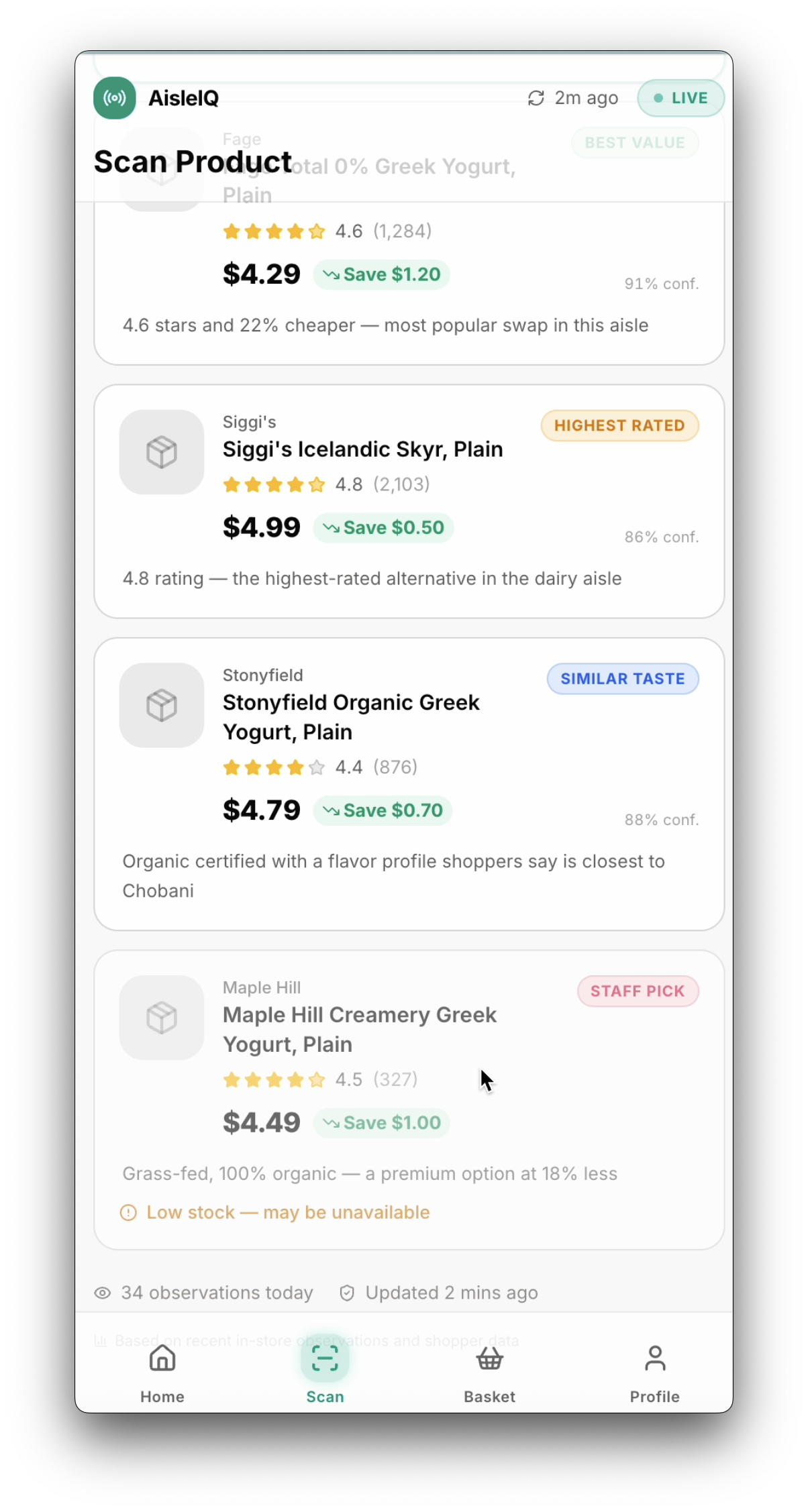
- Consumer app — scan products, compare prices between stores, and predict when and where your cheapest grocery trip will be.
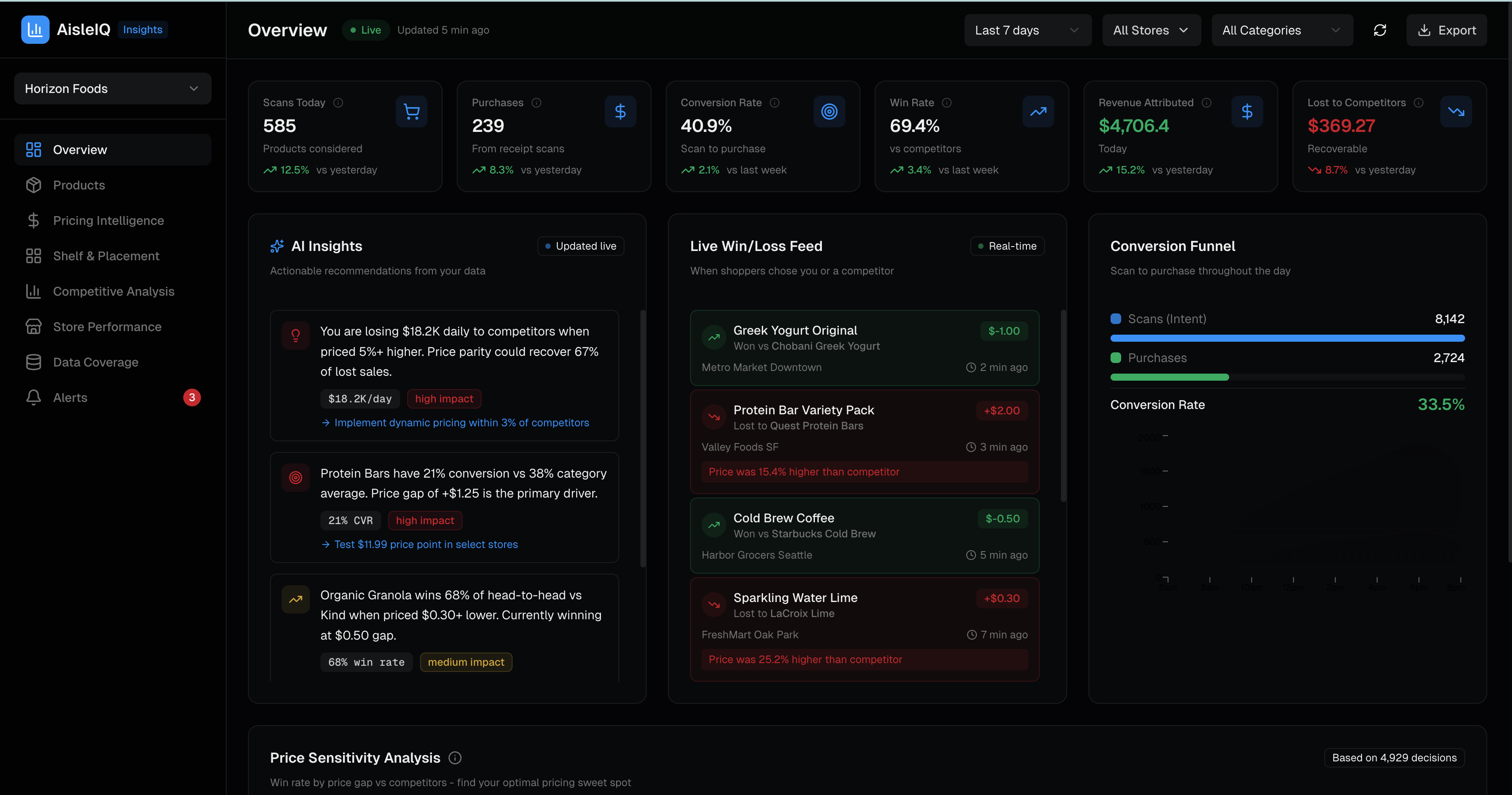
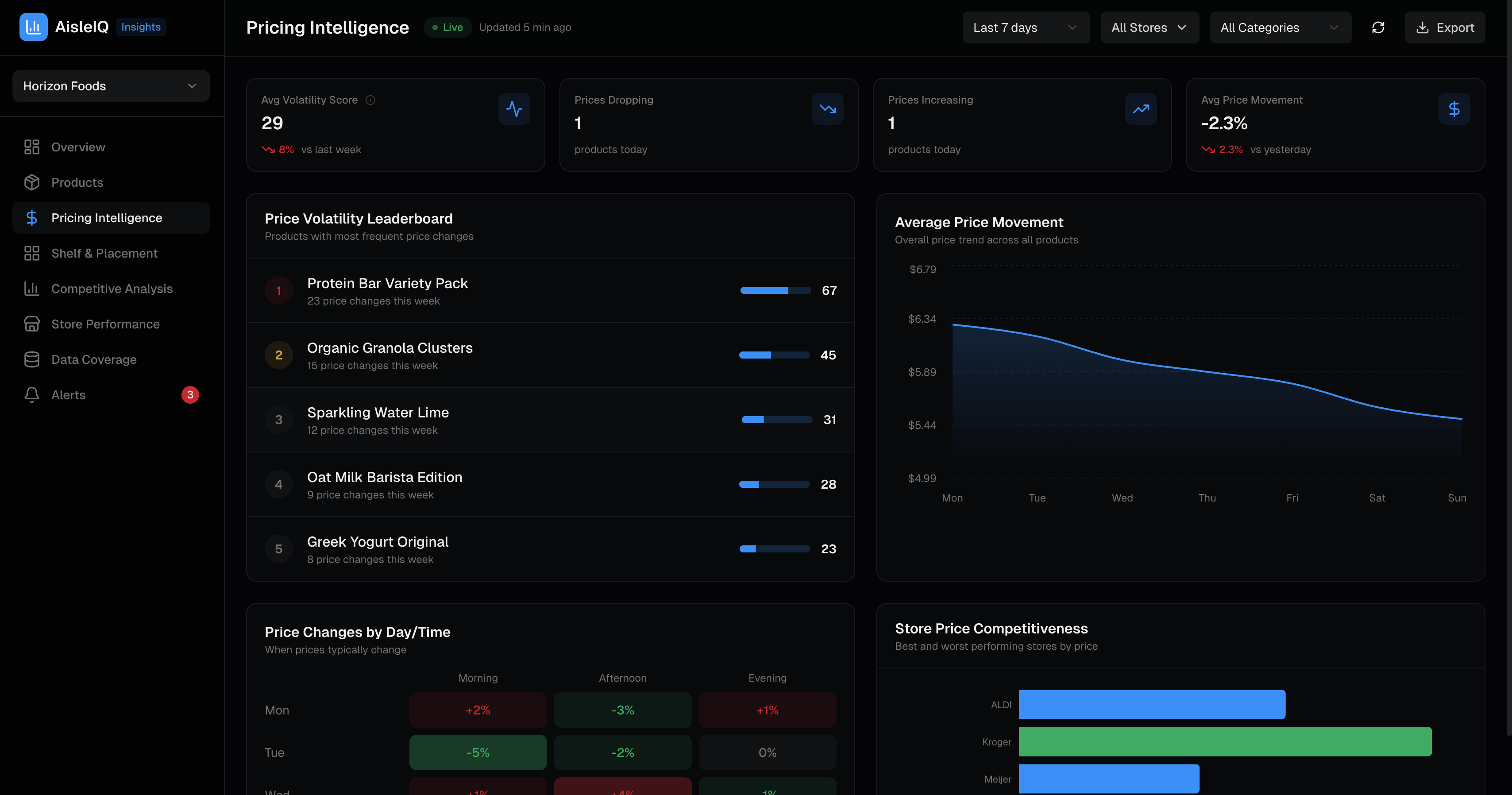
- Vendor platform — AI-powered analytics, competitive insights, and ML-driven pricing optimization tuned to goals like market share or revenue.
Nothing on the market delivers this level of human-to-product data; the closest analog is DoorDash recently asking dashers to photograph shelves — a signal of a market just opening up.
How we built it
Two Next.js apps connected via Firebase for real-time data, plus a FastAPI service running a TinyTimeMixer model we trained for price forecasting and optimization.
Built with
Challenges
- No reliable real-time retail pricing APIs.
- Designing business logic that gets valuable data while benefiting the contributor.
- Integrating ML predictions into a live dashboard.
Proud of
- End-to-end pipeline from scan → insight.
- Real-time dashboard with meaningful metrics: which day to plan your next trip (shoppers) and what price/placement wins market share (vendors).
- Working ML-based price prediction and weekly simulation.
What we learned
Real-world data is messy, but intent is what's valuable: knowing a customer walked in, debated products X and Y, and left with Y tells a richer story than stock counts — which is all the industry currently provides. Building something where users gain from the data they contribute (rewards on every receipt, product, and shelf scan → a cheaper haul) is a far friendlier way to collect it.
What's next
Collect daily data from surge-pricing grocery stores, improve data quality and user adoption, partner with retailers on discounts and rewards, and explore how this data could feed robotics.